
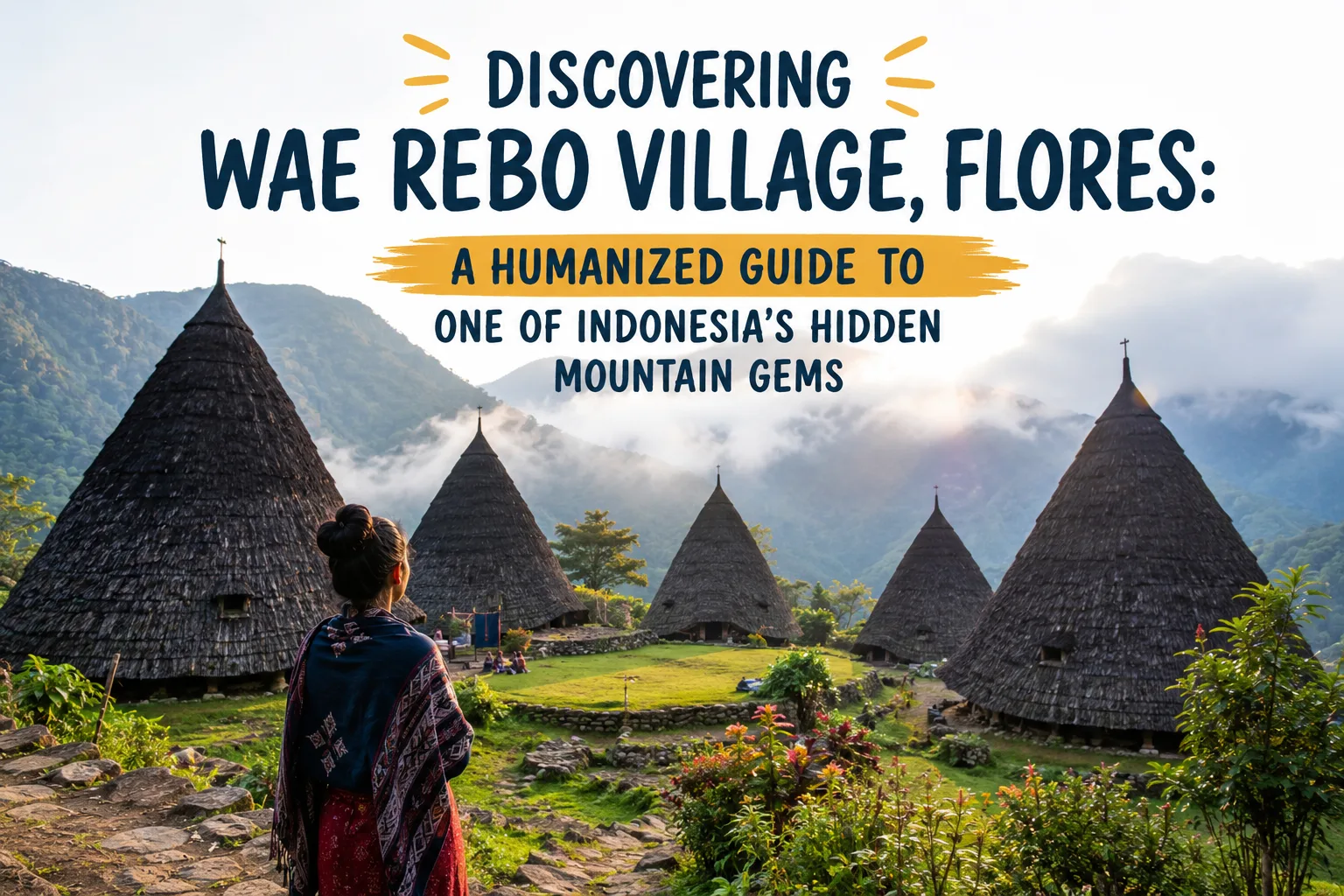
Discovering Wae Rebo Village, Flores: A Humanized Guide to One of Indonesia’s Hidden Mountain Gems
There are places you visit for the sights, and then there are places you visit because of the feeling.Wae Rebo, a remote traditional village tucked high in the mountains of Flores, Indonesia, is definitely the second kin…
By root August 26, 2026
Discovering Wae Rebo Village, Flores: A Humanized Guide to One of Indonesia’s Hidden Mountain Gems
There are places you visit for the sights, and then there are places you visit because of the feeling.
Wae Rebo, a remote traditional village tucked high in the mountains of Flores, Indonesia, is definitely the second kind.
Getting there isn’t especially easy. You can’t simply park your car next to the village and walk in for five minutes. The journey involves winding roads, mountain scenery, and a trek through the forest.
But perhaps that’s exactly why Wae Rebo feels so special.
When the distinctive cone-shaped houses finally appear through the mist, it feels less like arriving at a tourist attraction and more like discovering a place that has been quietly living its own life for generations.
Where Is Wae Rebo?
Wae Rebo is a traditional Manggarai village in Flores, East Nusa Tenggara, surrounded by mountains and dense tropical forest.
The village sits at an elevation of roughly 1,100 meters above sea level, giving it a cool, misty atmosphere that feels completely different from the tropical beaches often associated with Indonesia.
The journey itself is part of the adventure.
Most travelers reach the village through the nearby settlement of Denge before continuing on foot.
And yes, the trek can be tiring.
But don’t think of it as an inconvenience.
Think of it as your introduction to Wae Rebo.
The Trek to Wae Rebo
The final journey to the village is usually done on foot.
You’ll walk through forest trails, climb steadily uphill, and pass through some wonderfully peaceful scenery.
At times, you’ll probably wonder how people built a village this far into the mountains.
That’s part of the charm.
There are no busy streets, shopping malls, or rows of souvenir shops waiting at the end.
Instead, you gradually leave the modern world behind.
The sound of engines disappears.
The forest gets quieter.
And eventually, you arrive.
The First View of the Village
Then comes the moment many travelers remember most.
You step out of the forest and see the traditional houses of Wae Rebo.


The houses, known as Mbaru Niang, have distinctive cone-shaped roofs that rise dramatically toward the sky.
Surrounded by green mountains and often covered in mist, the village looks almost like a scene from a fantasy film.
But this isn’t a movie set.
It’s a real community with a long history and a living cultural tradition.
That’s what makes visiting Wae Rebo different from simply visiting an old historical site.
The Famous Mbaru Niang Houses
The traditional houses are probably the first thing you’ll notice.
Mbaru Niang houses have large, conical roofs made from natural materials and are designed to accommodate multiple families.
Their architecture reflects the Manggarai people’s relationship with their environment and community.
The houses aren’t simply beautiful buildings to photograph.
They are part of everyday life and cultural identity.
So when visiting, it’s important to remember that you’re entering someone’s home and community—not an open-air museum.
Take photographs respectfully and follow local instructions about where visitors can and cannot go.
Experience the Village at a Slower Pace
One of the best things about Wae Rebo is that there isn’t a huge list of things you need to accomplish.
You don’t need to rush from one attraction to another.
Walk around.
Sit for a while.
Talk to people if they are open to conversation.
Watch daily life unfold.
You might see villagers preparing food, working with traditional crafts, tending to their surroundings, or simply enjoying time together.
These ordinary moments can be more meaningful than checking another attraction off your travel list.
Spending the Night in Wae Rebo
If conditions and village arrangements allow, staying overnight can make the experience much more memorable.
The village becomes especially peaceful in the evening.
There are no city lights competing with the stars.
The air gets cooler.
The sounds of the forest become more noticeable.
And suddenly you realize how different life feels when you aren’t surrounded by traffic, notifications, and constant noise.
Accommodation is simple.
Don’t come expecting a luxury resort.
Come expecting a cultural experience.
A warm meal, a basic sleeping space, and the opportunity to spend time in a remote mountain community can be worth far more than a five-star hotel for a night.
Food and Local Hospitality
One of the nicest parts of staying in a traditional village is sharing a meal.
Food in Wae Rebo is generally simple and locally influenced, with rice, vegetables, and other regional ingredients forming an important part of meals.
Don’t expect an elaborate restaurant menu.
That’s not the point.
The experience is about eating together, experiencing local hospitality, and understanding how food fits into daily life in a remote community.
Sometimes a simple meal after a long mountain trek tastes better than anything you could order in a fancy restaurant.
Learn About Manggarai Culture
A visit to Wae Rebo is also an opportunity to learn more about Manggarai culture.
The village has its own traditions, ceremonies, architecture, and social customs.
If there is a traditional welcome ceremony or cultural activity during your visit, approach it with respect.
Listen rather than interrupt.
Ask questions rather than assuming.
And remember that not every cultural practice exists for tourists.
The best travelers aren’t the ones who collect the most photographs.
They’re the ones who leave with a better understanding of the place they visited.
What Makes Wae Rebo Different?
Indonesia has no shortage of beautiful destinations.
Bali has beaches and temples.
Komodo has dramatic islands and famous wildlife.
Flores has spectacular coastlines and volcanic landscapes.
But Wae Rebo offers something different.
Connection.
The journey forces you to slow down.
The remote location makes modern conveniences less important.
And the village itself encourages you to pay attention to people, architecture, traditions, and the landscape.
It’s travel at a different speed.
What Should You Bring?
Because you’ll need to trek to Wae Rebo, packing light is a good idea.
Consider bringing:
- Comfortable trekking shoes
- Alightweight backpack
- Warm clothing
- Rain jacket
- Reusable water bottle
- Snacks
- Small flashlight or headlamp
- Insect repellent
- Sunscreen
- Power bank
- Basic toiletries
- Camera
The weather in the mountains can be unpredictable, so a rain jacket is particularly useful.
And please carry your rubbish back out with you.
Remote places don’t have the same waste-management infrastructure as major tourist destinations.
When Is the Best Time to Visit Wae Rebo?
The dry season is generally considered more convenient for trekking, as heavy rain can make mountain trails muddy and slippery.
However, Flores has a tropical climate, and weather conditions can change quickly.
The misty atmosphere that surrounds Wae Rebo after rain can actually make the village look even more magical.
Before traveling, check current weather and local access conditions.
If the trail is considered unsafe, don’t underestimate the mountains.
Is Wae Rebo Worth the Effort?
Absolutely—but only if you understand what you’re coming for.
If you want nightlife, luxury resorts, shopping, and easy transportation, Wae Rebo probably isn’t the right destination.
If you enjoy slow travel, cultural experiences, hiking, nature, and places that feel genuinely remote, it’s much easier to understand the appeal.
The trek may leave your legs tired.
Your clothes may get dirty.
The weather may not cooperate.
And your phone signal may disappear.
But that’s also the point.
For a little while, you’re living at the rhythm of the mountain.
A Few Responsible Travel Tips
Wae Rebo is a small community, so responsible tourism matters.
When visiting:
- Respect local customs.
- Follow village rules.
- Ask before photographing people.
- Don’t enter private areas without permission.
- Avoid excessive plastic waste.
- Support local guides and community-run services.
- Dress appropriately for the cultural setting.
- Listen when local people explain traditions.
- Avoid treating cultural ceremonies as entertainment.
A respectful visitor can help tourism benefit the community without changing what makes Wae Rebo special.
Final Thoughts
Discovering Wae Rebo is less about finding another beautiful place in Indonesia and more about experiencing a different way of life.
The journey through the forest, the first sight of the Mbaru Niang houses, the cool mountain air, the simple food, and the quiet evenings all come together to create something that feels remarkably personal.
You may arrive as a traveler looking for an off-the-beaten-path adventure.
But you might leave thinking about something much simpler:
How little we actually need to feel connected to a place.
And perhaps that’s the real beauty of Wae Rebo.
It doesn’t try to impress you.
It simply sits quietly in the mountains, waiting for those willing to make the journey.
Leave a Reply