
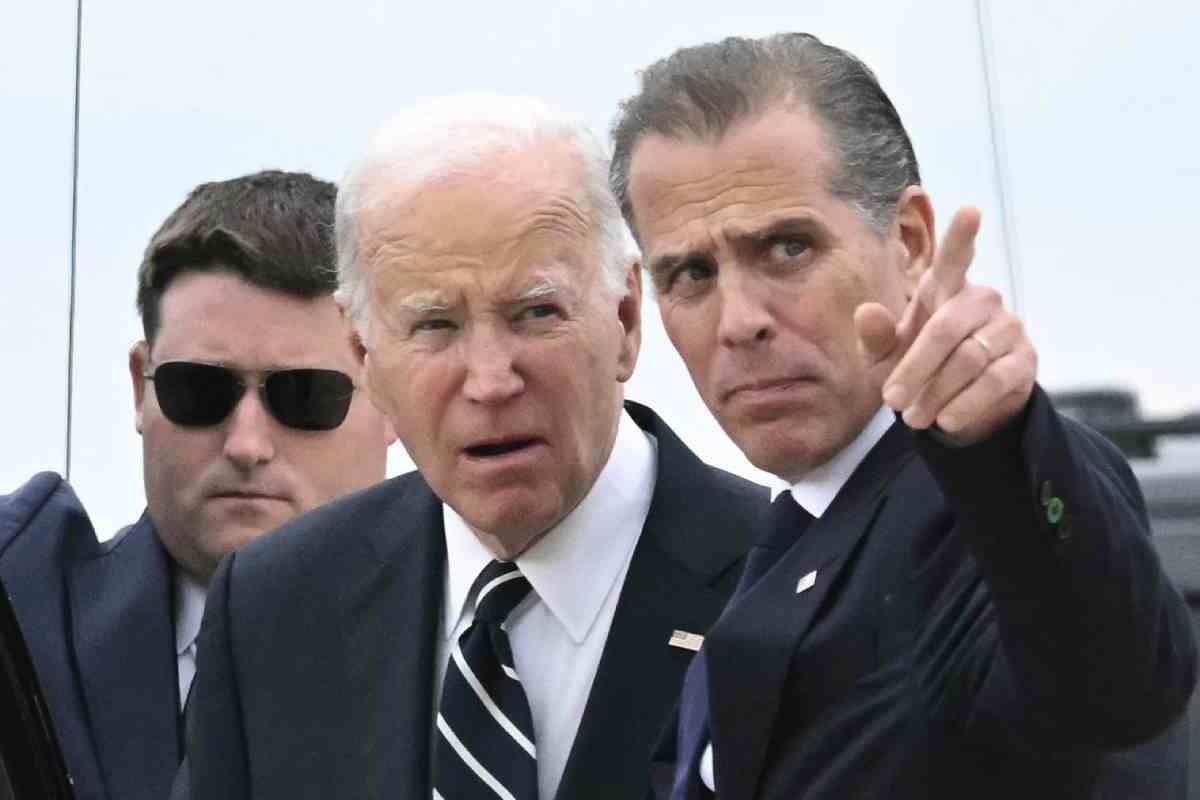
Hunter Biden has now tied one of the most controversial income streams of his life directly to the financial reality of his years-long drug addiction.
In a newly released interview on the Dopey addiction-and-recovery podcast, the former president’s son was asked how he continued paying for cocaine, sex workers, luxury lodging and the chaotic lifestyle he has described from the depths of his crack addiction.
His answer was blunt: he said he “never went broke” and pointed specifically to the fact that he was still serving on the board of Ukrainian energy company Burisma.
That does not prove that a particular Burisma payment can be traced directly to a particular drug purchase. It does establish something narrower and significant: Burisma compensation was part of the income that kept Hunter financially solvent while he was spending heavily during his addiction.
The disclosure lands only months after Hunter made another concession that once would have been politically explosive. He now openly says he should never have accepted the Burisma board seat in the first place.
Hunter Biden has acknowledged that Burisma income helped sustain him financially during his addiction. That is not the same as a forensic tracing showing that specific Burisma dollars purchased specific drugs.
The New Admission Came on an Addiction Podcast
The Dopey episode was released on August 28, 2026 and focused primarily on addiction, trauma and recovery rather than partisan politics.
Hunter described his progression from alcohol abuse to crack cocaine after the death of his brother Beau and recounted periods in which his life became dominated by drugs, dealers, motels and increasingly dangerous behavior.
When host Dave Manheim asked how he managed to keep paying for that lifestyle, Hunter said he never went broke.
He then pointed to continuing income sources and specifically mentioned Burisma.
Hunter also said that the board required him, in his telling, to appear for four meetings a year and that he was able to do that even while he was a crack addict and “out of my mind.”
That description is Hunter’s characterization of his board obligations. It should not automatically be treated as a complete corporate job description.
Federal Records Confirm Burisma Paid Him Enormous Sums
The scale of the money is not speculative.
Special Counsel David Weiss’s federal tax case stated that Hunter joined Burisma’s board in approximately April 2014 and that the company agreed to pay him an annual salary of roughly $1 million through monthly payments.
According to the indictment later incorporated into Weiss’s final report, Burisma reduced Hunter’s compensation to approximately $500,000 per year in March 2017, and he remained on the board until approximately April 2019.
The federal filing listed about $1,002,016 in Burisma income for 2016, $630,556 in 2017, $491,939 in 2018 and $160,207 in 2019.
Those years overlap with the period in which Hunter’s addiction became particularly severe.
The same federal prosecution documented millions of dollars in total income and extraordinary personal spending while Hunter failed to pay substantial federal taxes.
The government proved and Hunter ultimately admitted federal tax offenses. He was never convicted of a crime for accepting the Burisma board position itself.
The Tax Case Already Connected His Income to Drugs and an Extravagant Lifestyle
The new podcast comments do not appear in a vacuum.
Federal prosecutors had already described a period in which Hunter earned millions while spending heavily on drugs, escorts, girlfriends, luxury hotels, rental properties, clothing and other personal expenses instead of paying taxes he owed.
Hunter pleaded guilty in September 2024 to all nine federal tax counts brought against him in California, including felony and misdemeanor offenses.
Separately, a Delaware jury convicted him in June 2024 on three felony firearm counts tied to his drug use at the time he purchased a revolver in 2018.
Those prosecutions established legal accountability for tax and gun conduct connected to the addiction years.
They did not establish that Burisma hired Hunter as part of a criminal bribery agreement with Joe Biden.
Hunter Now Says He Should Never Have Taken the Burisma Seat
The most important change in Hunter’s public posture is not an admission of corruption. It is an admission of terrible judgment.
During a June 2026 interview with Dax Shepard, Hunter was asked whether any of the criticism surrounding Burisma was valid.
He answered that the valid criticism was that he should never have taken the board seat.
He has repeated the point in subsequent interviews, including an NPR conversation in which he acknowledged that his father’s position contributed to why the job was offered and said he should not have accepted it while Joe Biden was vice president.
Hunter still insists he was professionally qualified to sit on corporate boards because of his legal, governance and nonprofit experience.
He also continues to deny that he used Joe Biden to obtain an official government favor for Burisma.
Hunter’s admission is about judgment, political optics and the obvious conflict created by his father’s office. He has not admitted that the Burisma job was itself a criminal scheme.
He Has Also Acknowledged the Biden Name Helped
For years, one of the most obvious questions surrounding Burisma was why a Ukrainian energy company would pay the vice president’s son such large sums.
Hunter has increasingly given a less defensive answer.
In his 2019 ABC interview, he said he probably would not have been offered the Burisma position if his last name were not Biden.
In his 2026 NPR interview, when asked whether the money came in part because he was Joe Biden’s son, Hunter answered yes.
That concession matters.
It does not prove an illegal quid pro quo, but it reinforces the argument that proximity to political power had commercial value even if no government policy was ever changed.
Burisma Created an Obvious Conflict Problem From the Beginning
Hunter joined Burisma in 2014 while Joe Biden was vice president and a leading Obama administration official on Ukraine policy.
Burisma was controlled by Mykola Zlochevsky, a former Ukrainian government minister whose business affairs had drawn corruption scrutiny.
That made Hunter’s role politically combustible even without proof of criminal conduct.
The appearance problem was simple: a foreign company operating in a country where the vice president had substantial policy responsibility was paying the vice president’s son extraordinary compensation.
Hunter’s defenders can argue that he had corporate-governance experience and that private citizens are permitted to accept foreign business work.
Critics can reasonably answer that a person with his family connection should have recognized the conflict before accepting the money.
Hunter now largely concedes that second point.
Joe Biden’s Public Denials Were Extremely Broad
The controversy was intensified by Joe Biden’s own categorical language.
During the 2019 presidential campaign, Joe Biden repeatedly said he had never discussed his son’s overseas business dealings with him.
He also said he had never discussed business with his son, brother or other family members and sought to draw an absolute wall between private family business and public office.
The White House continued to defend the proposition that Joe Biden was not involved in Hunter’s businesses.
Those statements created a high factual bar.
Evidence later showed that Joe Biden did have social contact with some of Hunter’s business associates, including phone conversations and dinners, even though witnesses disputed whether substantive business was discussed.
The Evidence Shows Access — but Not a Proven Burisma Quid Pro Quo
Hunter’s former business partner Devon Archer gave some of the most important testimony on this question.
Archer said Hunter put his father on speakerphone around 20 times over roughly a decade while friends or business associates were present.
He described the Biden name and the perceived access surrounding it as part of the “brand” Hunter brought to business relationships.
Archer also confirmed social encounters in which Joe Biden appeared at dinners attended by Hunter and business associates, including a 2015 Cafe Milano dinner at which a Burisma executive was present.
But Archer repeatedly said Joe Biden did not discuss substantive business on the calls he witnessed.
He also said he was unaware of Joe Biden changing government policy to benefit Hunter or Burisma.
That distinction remains central to any defensible account of the scandal.
There is evidence that Hunter used proximity to his father as part of the value surrounding his business relationships. The public record has not established that Joe Biden altered U.S. policy in exchange for Burisma payments to Hunter.
Republican Investigators Reached a Much Harsher Conclusion
House Republicans spent years investigating what they described as Biden-family influence peddling.
Their 2024 impeachment-inquiry report argued that Joe Biden knowingly participated in a system that monetized his political status and cited meetings, phone calls, financial transactions and testimony from former Biden associates.
Republicans argued that the family business model depended on clients believing the Biden name brought access and political influence.
That investigation produced substantial documentation about Hunter’s foreign income and the ways his father’s name appeared around his business activity.
But the House never impeached Joe Biden, and no court found that he took a Burisma bribe or changed Ukraine policy as part of a criminal arrangement with his son.
Some former Hunter associates accused Joe Biden of greater involvement, while others testified that the former president had no role in their business ventures.
The House Republican impeachment report is an official congressional investigative product, but its conclusions about Joe Biden’s knowing participation remain disputed political findings, not criminal convictions or judicial findings.
One of the Most Explosive Burisma Bribery Claims Collapsed
Any serious review of the Biden allegations also has to acknowledge evidence that failed.
An FBI informant once alleged that a Burisma executive had paid $5 million bribes to both Joe and Hunter Biden.
That claim became a major piece of Republican rhetoric.
Federal prosecutors later accused the informant, Alexander Smirnov, of fabricating the bribery story and said his contacts with Burisma did not match the account he gave the FBI.
That collapse does not erase other evidence about Hunter’s income, access or poor judgment.
It does mean the most sensational Burisma allegation cannot responsibly be recycled as established fact.
The New Podcast Also Deepens What We Know About Joe Biden and Hunter’s Addiction
The Dopey interview contains a separate revelation about what Joe Biden personally witnessed during his son’s descent.
Hunter described living with a crack dealer he called “Bicycles” and said his father arrived at the residence while vice president with a Secret Service motorcade.
According to Hunter, Joe Biden kept showing up and pushing him about treatment and recovery.
That account fits the broader record of a family repeatedly trying to intervene in Hunter’s addiction.
It also makes clear that Joe Biden was not remotely unaware of the severity of his son’s substance-abuse crisis.
The point should not be confused with knowledge of business wrongdoing. Knowing a son is addicted to crack is different from knowing that the son is committing a business crime.
Hunter’s new account supports the conclusion that Joe Biden knew how severe the addiction had become. It does not, by itself, prove that Joe Biden knew of or participated in unlawful foreign business conduct.
The Pardon Makes the ‘One Standard’ Argument Impossible to Ignore
There is another fact that now hangs over every argument about equal treatment.
On December 1, 2024, President Joe Biden granted Hunter a full and unconditional federal pardon covering offenses committed or potentially committed from January 1, 2014 through December 1, 2024.
The pardon included the gun and tax cases and was broad enough to cover other federal offenses within that period.
Joe Biden issued it after repeatedly saying he would not pardon his son.
He defended the reversal by arguing that Hunter had been selectively and unfairly prosecuted because of who his father was.
Critics saw the opposite: the ultimate exercise of presidential power on behalf of a close family member.
The pardon was constitutionally valid. Its legality does not make the political conflict-of-interest question disappear.
Hunter Was Prosecuted — and Then Protected by Presidential Clemency
The claim that Hunter simply escaped all scrutiny is also incomplete.
He was investigated for years by a federal prosecutor originally appointed during the Trump administration and retained during the Biden administration.
He was indicted, tried and convicted on the gun charges.
He pleaded guilty to all nine counts in the federal tax case.
That is more criminal scrutiny than most politically connected figures ever experience.
But he was then spared sentencing and the continuing federal consequences of those offenses by an extraordinarily broad pardon signed by his own father.
Both facts belong in the same story.
It is inaccurate to say prosecutors never pursued Hunter Biden. It is equally inaccurate to ignore that Joe Biden ultimately used presidential clemency to erase the federal criminal consequences facing his son.
Addiction Explains Conduct; It Does Not Automatically Excuse It
Hunter’s addiction story is genuinely harrowing.
His accounts of crack dependence, grief, family breakdown, dangerous behavior and recovery describe a disease that nearly killed him.
Addiction can impair judgment, destroy relationships and drive compulsive conduct.
That human reality deserves to be understood.
But it does not answer whether accepting foreign money while carrying the name of a sitting vice president created an unacceptable conflict.
It does not answer whether taxes were legally owed.
It does not answer whether public officials gave the country an adequately candid account of the overlap between family access and private business.
Compassion and accountability are not mutually exclusive.
The Strongest Accountability Case Does Not Need an Unproven Crime
The documented story is already serious without claiming more than the evidence proves.
Hunter accepted a highly paid seat on a foreign company’s board while his father held major responsibility for policy toward that company’s home country.
He now admits the Biden name was part of why opportunities came to him and says he should not have taken the Burisma job.
He remained financially supported by Burisma during years in which addiction and destructive spending consumed his life.
His father had social contact with some of the people around Hunter’s businesses despite broad public denials that he discussed or engaged with family business.
The family name helped create the appearance and, according to Archer, the commercial value of access.
Those facts justify continuing historical scrutiny even without proof that Joe Biden accepted a bribe or changed U.S. policy for Burisma.
The Media Double-Standard Claim Is a Political Judgment
The argument that a Republican family would have received harsher treatment from the press is impossible to prove as a simple factual proposition.
Hunter Biden’s business dealings received enormous media attention, congressional investigation, federal prosecution and years of partisan coverage.
At the same time, critics can reasonably argue that some outlets initially treated legitimate questions about Hunter’s foreign business arrangements too dismissively or bundled substantiated facts together with unsupported conspiracy theories.
The better standard is not to decide which political family deserves more hostile coverage.
It is to demand the same evidentiary rules for every family: verify payments, separate access from official action, distinguish conflicts from crimes and follow evidence wherever it leads.
What Can Actually Be Said With Confidence
Hunter Biden served on Burisma’s board from approximately April 2014 until April 2019.
Federal records show that Burisma agreed to pay him roughly $1 million annually before reducing his compensation to approximately $500,000 per year in 2017.
In the August 28, 2026 Dopey interview, Hunter said he “never went broke” during his addiction and specifically cited continuing Burisma board income when asked how he financed that period of his life.
That supports saying Burisma income helped keep him financially afloat during his crack addiction. It does not permit a claim that investigators traced particular Burisma dollars directly to particular drug purchases.
Hunter has also now repeatedly said that accepting the Burisma board seat was a mistake and that he should not have taken it while his father was vice president.
He nevertheless denies that he or Joe Biden committed wrongdoing in connection with the board position.
Hunter has acknowledged that being Joe Biden’s son contributed to the opportunities available to him.
Evidence shows Joe Biden had social contact with some Hunter Biden business associates, including speakerphone calls and dinners.
Devon Archer testified that the Biden name and perceived access were part of the value Hunter brought to business relationships, but he also said Joe Biden did not discuss substantive business on the calls he witnessed and that he knew of no policy action taken by Joe Biden to help Burisma.
House Republicans concluded that Joe Biden knowingly participated in a broader influence-peddling system. Those conclusions remain disputed and were never converted into an impeachment, criminal conviction or court finding against Joe Biden.
A central allegation that Burisma paid $5 million bribes to Joe and Hunter was later alleged by federal prosecutors to have been fabricated by FBI informant Alexander Smirnov.
The new Dopey interview also makes clear that Joe Biden personally knew the depth of Hunter’s addiction and repeatedly tried to intervene.
Hunter was convicted on federal gun charges and pleaded guilty to federal tax crimes arising from the same broader period.
Joe Biden then granted him a full and unconditional federal pardon covering January 1, 2014 through December 1, 2024 after previously saying he would not pardon his son.
So the strongest defensible accountability argument is not that the new interview finally proves a Biden bribery conspiracy.
It is that Hunter Biden’s own words now make the conflict harder to minimize: foreign board money helped sustain him through his addiction, he concedes he should never have taken the job, and the Biden name unquestionably carried commercial value.
That deserves scrutiny under the same standard that should apply to every politically connected family — without excusing proven conduct because of addiction and without turning unresolved suspicions into facts.
Leave a Reply